
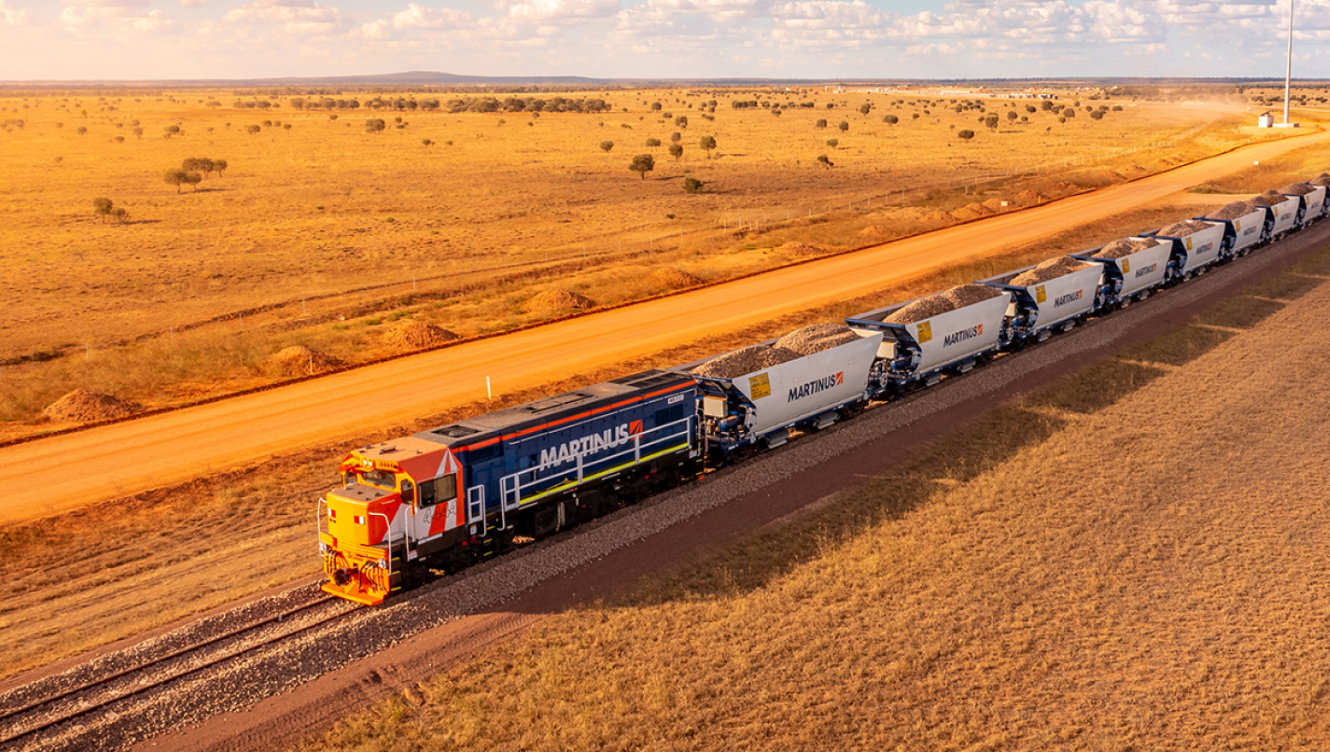
As one of Australia’s most significant freight infrastructure projects, Inland Rail is a large undertaking by any measure. But for Inland Rail’s Location Content Manager, John Abraham, the real story is what it means for regional communities.
“Inland Rail is essentially 13 projects from Victoria to Queensland,” he said, adding that it is being built in stages from Melbourne to Brisbane via regional Victoria, New South Wales and Queensland.
The reality of Australia’s capacity for such a large project has led not only to this staggered delivery, but also to strong local content commitments and a sustained focus on capability development for regional suppliers. Much of it with the help of a close partnership with ICN NSW.
During the past two years, Inland Rail has completed its Local Supplier Capability Development Program in Southern NSW, delivered in two distinct phases aligned to construction activity:
- Phase 1 (2024) – along the Albury to Parkes section, with multiple workshops over six months in Parkes, Forbes, Wagga Wagga and Albury.
- Phase 2 (just completed) – along the Illabo to Stockinbingal section, with workshops held in Cootamundra and Junee.
In total, 270 local and regional businesses have taken part in this program. By tracking the spend on participants, John notes that it is nearing $15 million.
“Their growth into other industries and projects in the short to long term is the unknown story, the legacy we wanted to leave.”
That “legacy” lens is critical. Inland Rail is a large but finite project, but it is keen to give regional businesses the information to position them to win work long after the track in complete.
“The design of the program was deliberate in not simply being about Inland Rail’s supply chain with its fixed lifespan,” John said. “It was about preparing local business to be aware of and ready to consider and pursue all major industries and projects in the region now and into the future.”
To support that, Inland Rail invited other major project owners to attend sessions, that included workshops on such topics as compliance, tendering, and Australian and International Standards.
According to John, the program helped answer three crucial question for small businesses: “Where do I fit in the supply chain? At what tier level? Do I fit at all?”.
And none of this would have been possible without ICN NSW and its regional consultants, including Regional Manager – Murray and Riverina, Geoff Reardon.
Inland Rail uses ICN’s Gateway platform from the earliest stages of each section. First with a general expression of interest (EOI) managed by Inland Rail, and later with detailed packages owned by the awarded contractor. This creates early visibility of opportunities and a rich dataset of interested suppliers across project areas and regions.
But for John, Gateway is only half the story.
“Geoff and his work ethic and manner of approach with project proponents, our principal contractors, other regional buyers and local industry is exceptional and unique,” he said.
Geoff’s role in the Inland Rail project has crossed populating project pages, attending every workshop and actively connecting regional suppliers with buyers. As john describes, it’s often in the very hands‑on, “old‑school” ways that local businesses value.
As Inland Rail waits for funding confirmation for similar programs north of Narromine, Johne says he intends to continue this successful partnership model with ICN. A partnership that is shaping not just a rail line, but a stronger, more capable regional supply base for the future.
Learn more about Inland Rail.
Disclaimer: This article was written before the Australian Government's announcement on 6 May 2026 on Inland Rail’s future funding. Inland Rail remains committed to successfully completing all sections of the project from Beveridge to Parkes by 2027.