
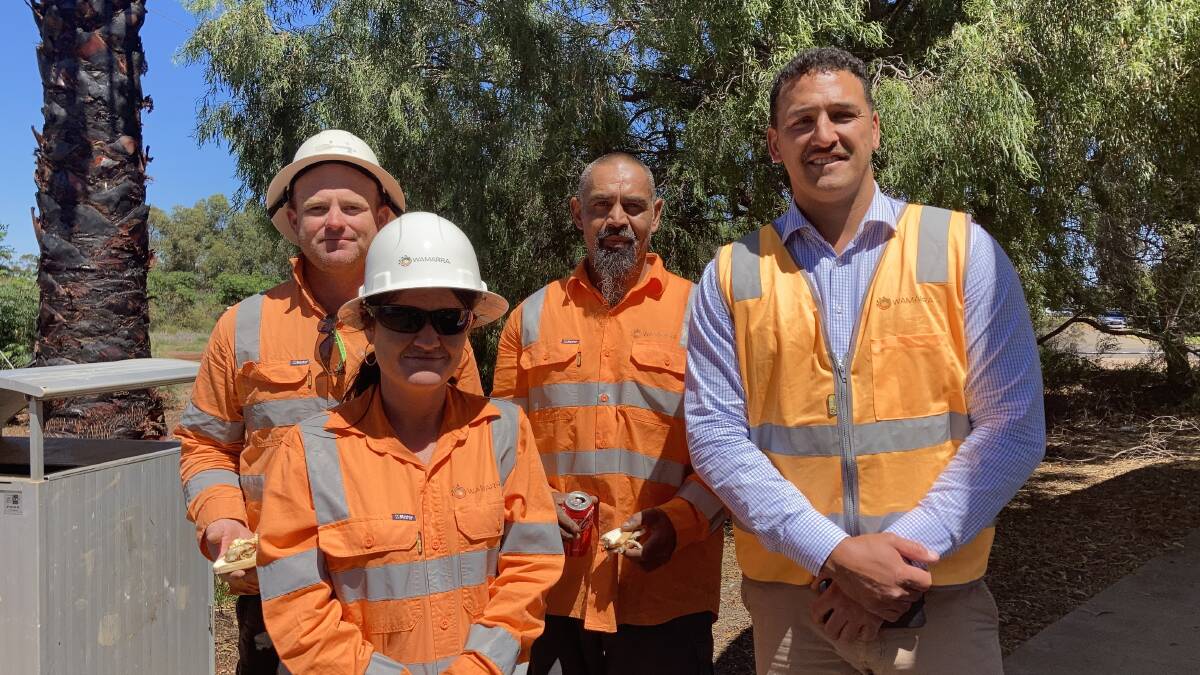
For Melbourne-based Aboriginal-owned civil contracting business, Wamarra, opening a satellite office in Wagga Wagga, NSW, was a solid business decision that allowed it to access a growing pipeline of projects in the region.
And the 2023 move is already paying strong dividends for both the business and the local community.
Founder and managing director Hayden Heta, a proud Wiradjuri man, said the move into Wagga in 2023 was driven by both heart and head – a desire to return to Country and create opportunities for his community, combined with a clear infrastructure pipeline that aligned perfectly with Wamarra’s capabilities.
“There just so happens to be a huge pipeline of opportunities aligned to the scope of works that we deliver,” he says.
“Wherever we go, we don’t want to just go for a singular project. We’re committed to investing in community, we’re committed to identifying a pipeline and investing in those people.”
From its Wagga base, Wamarra has secured a road package for Defence’s Riverina Redevelopment program, access works on Humelink, and a shuttle bus service for the Inland Rail project’s Junee area, staffed by Indigenous drivers.
The company has also been working for about a year at Kapooka Military Area – outside the redevelopment project – and has delivered a Roads to Home project in Griffith with the Griffith Local Aboriginal Land Council. The latter work has since lead to three more Roads to Home projects across New South Wales.
Wamarra is built around three pillars: continuity of employment, training and development, and a culturally safe and inclusive workplace.
“We promote ourselves as a self-performing contractor,” Hayden said. “All of our employees are engaged full time. Each of our employees has a tailored career development plan, and for us a culturally safe environment means Aboriginal people leading Aboriginal people.”
Wamarra currently employs 97 people, and more than half are First Nations employees.
Apart from the project wins, the move into Wagga has resulted in tangible benefits to the local Indigenous community. The company has hired its first full-time Indigenous grader operator in the region, and its New South Wales superintendent is both Indigenous and local to Wagga.
Some 90 percent of its total blue-collar labour force is Indigenous, and while proud of this achievement, Wamarra is also focused on lifting Indigenous representation in white-collar and corporate roles, an area Heta openly acknowledges is a systemic challenge across the industry.
“There is a shortage of Aboriginal engineers, and we’re really focused on trying to identify and help them build their careers,” he says. The company currently employs two Indigenous engineers, a site engineer on a Newcastle project and an undergraduate cadet, who the company supports through a structured cadet program that combines university study with on-the-job experience.
“We want to create employable employees so that if one day we did have to leave town, the people who choose to stay behind can walk straight into another job,” Hayden said.
And the company’s commitment to the Riverina extends beyond employment and local projects. It sponsors the Griffith Threeways Aboriginal Rugby League Club, the Dindima Aboriginal Rugby League Club in Wagga, and the Korin Gamadji Aboriginal Youth Program, alongside other youth initiatives.
A key enabler of Wamarra’s growth in southern New South Wales has been its relationship with ICN, particularly Riverina Murray Regional Manager, Geoff Reardon.
Hayden recalls sitting down with Geoff early on to review a detailed project pipeline, a conversation that helped give Wamarra the confidence to invest in a permanent presence in Wagga.
“Geoff’s been a wonderful supporter of ours and of Aboriginal businesses and community in general,” Hayden said. “He always takes the time to provide a thorough update on what the pipeline of work is in the region. That really encouraged us to go and invest in an office and start looking at local resources.”
Wamarra uses the ICN Gateway platform to track expressions of interest and validate opportunities, but Hayden said the real value of ICN is in the networking, introductions and advocacy it provides.
“It’s not only a platform to identify opportunity; it’s a platform to be connected to your industry clientele or other like-minded businesses,” he says. “It just takes one person to validate who you are and that, yes, those outcomes you talk about, you’re delivering on. Having someone like Geoff advocating for your business just provides another layer of confidence to the market.”
From office openings and project wins to local sponsorships and long-term career pathways, Wamarra’s Wagga operations demonstrate how targeted use of the ICN network, combined with a deep commitment to Aboriginal employment and community, can turn a regional pipeline into lasting regional prosperity.
Go to the company website for more information about Wamarra.