
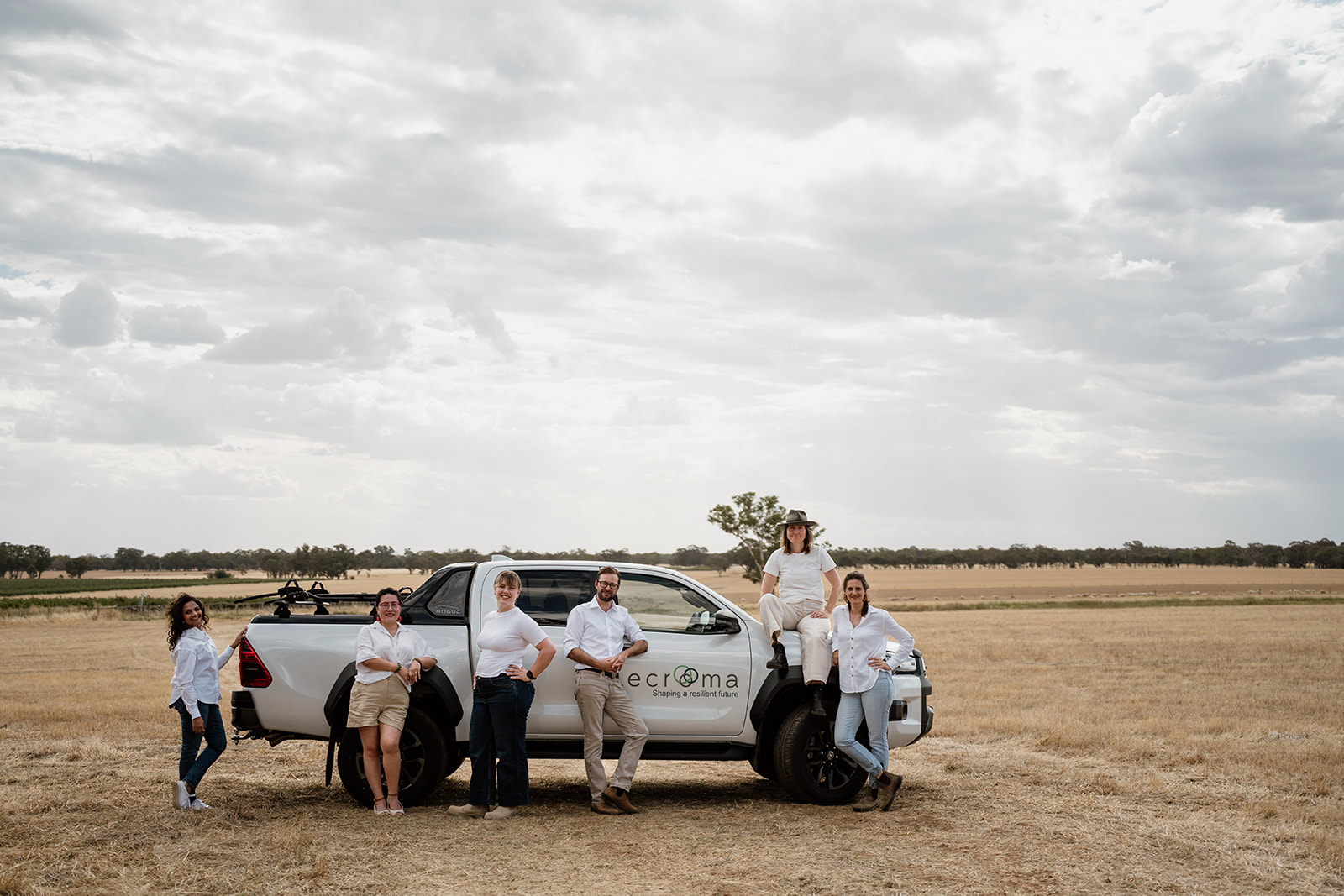
Based in Rutherglen in northern Victoria’s wine region, Lecroma works with major infrastructure project teams to help them understand and engage with regional businesses and communities to break down the barriers between commercial interests and local priorities.
Lecroma’s competitive edge lies in being a regional business itself. It draws on this experience, as well as first-hand knowledge of local businesses, to help understand how large projects can affect the suppliers and services already supporting those communities.

Before starting Lecroma, Founder Gregory Ley worked in international development and national security across the Asia-Pacific region. He spent more than a decade helping design Australia’s regional security and development systems before returning to his hometown to apply that international knowledge to local projects.
The company now focuses on helping major infrastructure projects land well in regional communities, primarily in NSW and Victoria. Its work includes community engagement and assessing the social and economic effects of projects, including their impact on local industries and supply chains.
According to Gregory, the challenge is not limited to the needs of any single project. Multiple developments can place demand on the same local roads, construction materials, trades and other services. Even a relatively small increase in demand can be significant when local businesses are already serving their communities.
It is important to understand the ongoing and perpetual needs of the local community, and to be able to clearly articulate those needs.
A central part of that work is understanding what local businesses can provide and what opportunities are realistic. He also stressed the importance of ensuring that large developments do not crowd out existing small businesses and services.
“What is impressive about the regions is that there are a lot of sophisticated, completely vertically integrated business models that are operating globally, you're regularly running into folk who are incredibly skilled, and some of them also just want to participate in the conversation and be given that platform.” Gregory said.
Lecroma’s relationship with the Industry Capability Network (ICN) helps address these challenges. Gregory began working with ICN around the time renewable energy zone (REZ) planning and project assessments were getting underway in late 2022 and early 2023. He saw ICN as a way to connect project proponents with regional businesses and to make local capability more visible.
“There was no obvious platform or hub home that was neutral ground like ICN,” he said, describing the need for an independent organisation able to help connect project opportunities with regional suppliers, and for the project proponents to get a full picture of the capability in regional Australia.
And that knowledge is something Lecroma relies on in its increasing role as a “mediator and broker”. In fact, Gregory noted, as the scale and pace of change grows, and infrastructure investment can lead to further investment, it’s even more important to know the full picture to consider the cumulative effects and what regional development may look like after construction ends.
The relationship works both ways. Lecroma can give ICN notice of upcoming projects and proponents, while ICN can help identify and validate businesses and capabilities in the region. This gives projects a clearer picture of what is available locally and helps businesses learn about opportunities to participate. ICN can then connect local suppliers with project needs early enough for them to consider how they might take part.
And according to Gregory, this timing matters. He said that once a major project has its permits, contractors can move quickly to issue contracts, leaving little time to identify local suppliers.
He sees early engagement during the permitting stage as an opportunity to signal potential demand and give regional businesses more time to prepare.
Meanwhile, Gregory identified a remaining “coordination gap” in understanding how participation across multiple projects affects cumulative supply-chain and project risks. He said this gives ICN an opportunity to build on its knowledge of regional capability and use evolving technology, including AI, to better illuminate those connections.
For Lecroma, the partnership with ICN supports its practical goal to connect major project demand with the businesses and services that already make regional communities work.
Learn more about Lecroma.